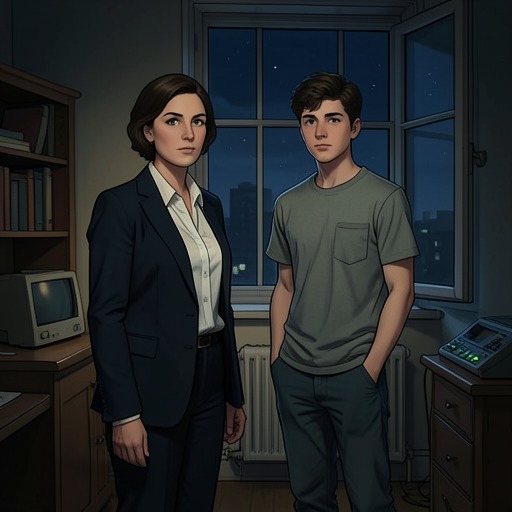
Grant
Firefly LaneGrant is Tully Hart’s on-again, off-again romantic partner, a relationship that brings her moments of closeness without the commitment she increasingly wants. Their history moves between private tenderness and public glamour, but its defining pattern is a mismatch: Tully begins to question whether their arrangement can become a lasting partnership, while Grant insists it need not change.
Identity and Introduction
Grant first appears in a social setting where he introduces himself by his first name and proposes that he and Tully skip exchanging life stories and simply enjoy themselves. His easy manner makes him an inviting companion, and the encounter establishes a style of intimacy based on pleasure and lightness rather than immediate disclosure or obligation.
That preference becomes more consequential as the relationship continues. Grant and Tully are not strangers who share a passing attraction; they develop a recurring romance whose duration gives Tully reason to wonder whether it might become something more settled. Yet the very informality that makes their encounters easy also leaves their future unspoken.
A Recurring Relationship
By July 1, 2000, Grant and Tully have been involved on and off for years. They have traveled around the world together, attended glittering parties and black-tie charity events, and acquired a public shorthand: the press calls him Tully’s “sometime love.” Tully recognizes the label as apt, but lately has begun reconsidering what it means for her.
Their shared life includes moments of physical and emotional ease. During one weekend together, they spend a romantic evening and are intimate; afterward, Tully says she is glad he is in town and that the encounter was what she needed. The scene shows that their relationship can offer immediate comfort and mutual pleasure. It does not, however, settle the question of whether they want the same kind of life.
Commitment and Separation
The tension surfaces directly when Tully raises their relationship again. On the morning of July 1, she wakes beside Grant before her regular 3:30 alarm and asks whether she is what he wants. He responds that the conversation has happened before and argues that her being thirty-nine changes nothing about who they are; he wants them not to spoil a good thing. Tully understands that he treats her question as though she were asking him to marry her or have a child, although she has asked neither.
His answer makes the limits of their arrangement plain. Tully’s question is about their relationship and its direction, but Grant frames change itself as a threat to what already works for him. The scene’s contrast between their physical closeness and their divergent expectations gives the relationship its central irony: they can share a bed and a long history without agreeing on a future.
Absence and Narrative Significance
By spring 2003, Tully is exhausted by the violence of the stories she has covered and feels isolated even among people who admire her. Grant has not called for almost four months, and their last conversation ended with his telling her that he does not want what she wants. The absence turns their earlier disagreement into a sustained loss: the relationship that once supplied companionship is no longer available as dependable support.
Grant’s role in Tully’s story is therefore less that of a settled partner than of a recurring possibility that cannot answer her need for mutual commitment. The public nickname “sometime love” captures both the attraction and the limitation. Their history holds genuine pleasure and shared experience, yet its repeated return to uncertainty leaves Tully confronting the difference between being wanted in the present and building a life together.